Tap water in Portugal is safe. But the chlorine taste and the sediment from old pipes push many families to buy bottled water and carry it home, week after week.
3 tonnes
carried every year
That’s the weight of water a family of four brings home from the supermarket in a year: about 580 five-litre bottles.
€850
a year, or more
At €0.20–0.29 per litre, water for drinking and cooking becomes a fixed household bill.
€0.10
deposit per bottle
Since April 2026, bottles up to 3 litres carry a Volta deposit. You have to keep them and take them back to a machine to get it back.
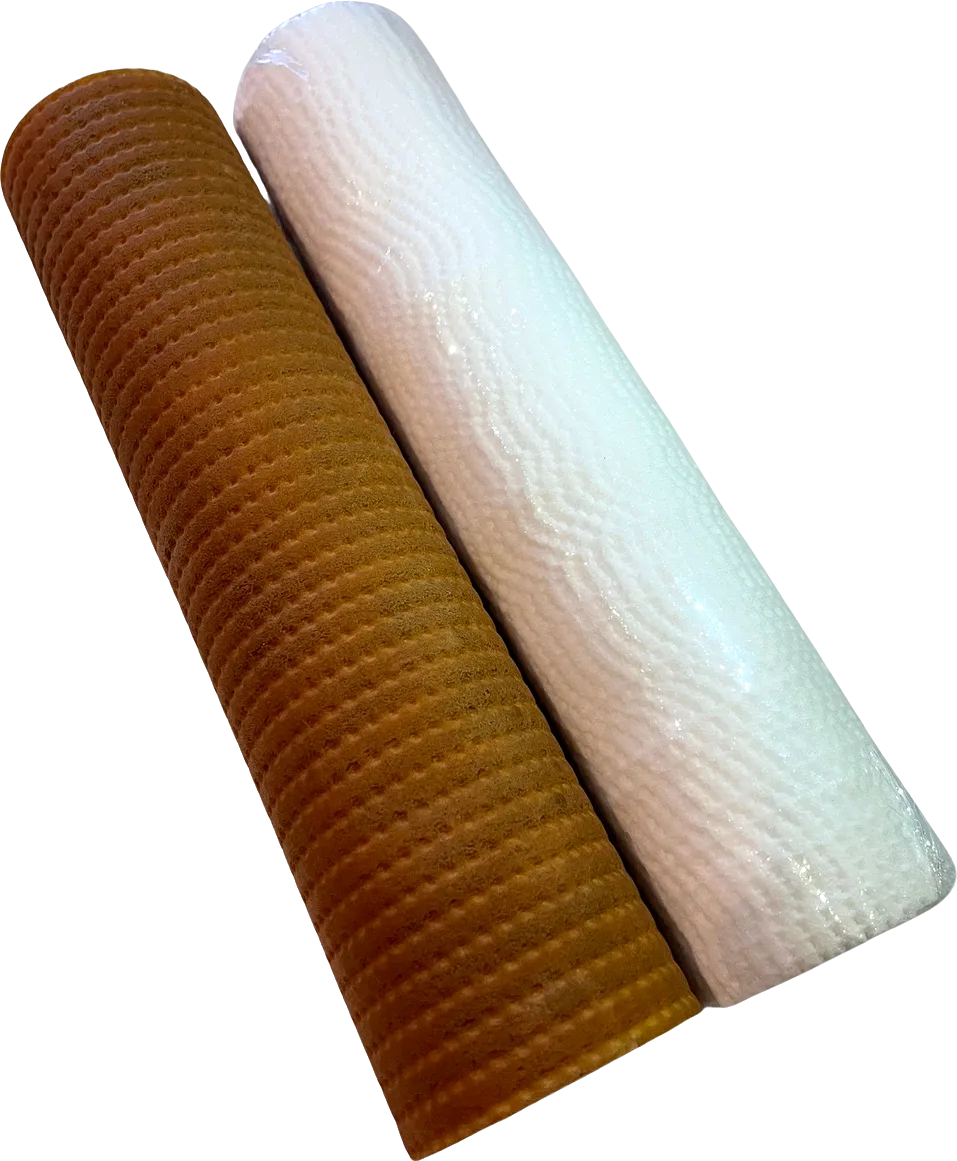
After 6 monthsNew
What the filter catches
Sediment pre-filter after 6 months in a home in Caldas da Rainha.
Sand, rust and sediment from the building’s pipes, stopped here before they reach your glass.
Environment
This is where a lot of the plastic we buy ends up.
Our beaches deserve less plastic
On the beaches monitored by the Portuguese Environment Agency, almost 9 in 10 items of litter are plastic, and bottle caps are among the most common. Every bottle you don’t buy is one fewer on its way there.
A family of four, one year, side by side
5 L bottles: 584 bottles, close to 100 m
1.5 L bottles: about 1,950 bottles, some 170 m
Football pitch, 105 m
With 1.5 L bottles, the row is longer than one and a half football pitches.
584
five-litre bottles a year for a family of four
~50 kg
of plastic a year, from those bottles alone
5,840
bottles in 10 years. Or none.
Doesn’t returning the bottles solve it?
It helps, but it isn’t enough. Volta collects far more bottles, but recycling isn’t endless: most recycled bottles never become a bottle again.
1 in 3
In Europe, only about a third of recycled bottle PET goes back into bottles. The rest becomes fibres and other products that are almost never recycled again.
~17%
The average share of recycled plastic in a new bottle (2021). The rest is new plastic made from oil.
22%
Recycling rate for plastic packaging in Portugal (2022 data). More than half of municipal waste still ends up in landfill.
The Volta deposit helps collect more bottles. But the plastic that pollutes least is the plastic that’s never made.
Sources: APA (Portuguese Environment Agency), beach litter monitoring 2024–2025 and waste report (2022 data); Zero Waste Europe, 2022 (2021 data); DECO PROteste, 2024. Weight of a 5 L bottle: 80 to 140 g.
How it works
Four stages between the pipe and your glass
Each stage stops smaller particles than the one before. The last one is an ultrafiltration membrane with 0.01 µm pores.
Sediment 10 µm
Stops sand, rust and visible particles.
Activated carbon
Reduces chlorine, taste, odour and organic compounds.
Sediment 5 µm
Catches fine particles and carbon dust.
Ultrafiltration 0.01 µm
A physical membrane that holds back bacteria, cysts and microplastics. Natural minerals pass through.
To give you a sense of scale
Human hair70 µm
Parasite cysts4–15 µm
Bacteria0.2–10 µm
Viruses0.02–0.3 µm
Membrane pore0.01 µm
The membrane pores are smaller than bacteria and smaller than most viruses. Calcium and magnesium, dissolved in the water, pass through, and they’re what gives water its taste.
Zdjęcie do podmianyZamontowana wylewka trójdrożna, woda filtrowana leci do szklanki, światło dzienne
3-way tap
Replaces your current kitchen tap: hot, cold and filtered water from one tap, in the same hole. No drilling into your countertop.
Renting?
No building work, no drilling. You keep your old tap: when you move, put it back and take the system with you to your new kitchen.
Savings
How much do you spend on bottled water?
Adjust the numbers to your home. Prices are average supermarket prices.
One of the sink with your current tap, one of the inside of the cupboard. That tells us what to bring.
2
We book a date on WhatsApp
We reply the same day. In and around Caldas we usually install within the week.
3
Installed in up to 3 hours
We swap the tap, fit the system, test everything and show you how to change the filters.
Request
Book your installation
Two steps, about two minutes. We reply on WhatsApp the same day.
More information
Compared with what’s out there
Approximate figures for a family of four.
Límpida
Bottled water
Filter jug
Reverse osmosis
Cost per year
~€65 in filters
€580–850
~€70 in filters
~€100 in filters
Where the water is
At the tap
Carry and store
Fill and wait
In a tank that refills slowly
Minerals
Kept
Kept
Kept
Almost all removed
Bacteria
Held back
Not applicable
Not held back
Held back
Water down the drain
None
None
None
2–4 L per litre filtered
Plastic
Filters only
Hundreds of bottles
Cartridges
Filters only
Why ultrafiltration and not reverse osmosis?
Reverse osmosis has its uses. For mains water, ultrafiltration does what’s needed without the downsides.
Keeps the minerals
Reverse osmosis strips out almost everything, calcium and magnesium included. The water tastes flat and often needs remineralising.
Wastes no water
An osmosis system sends 2 to 4 litres down the drain for every litre filtered. Ultrafiltration sends none.
No tank, no electricity
It runs on mains pressure. No tank taking up the cupboard, no pump.
Water on demand
Filtered water flows as soon as you open the tap, with no waiting for a tank to refill.
On a borehole or well? Then reverse osmosis may make sense. Mention it in your request and we’ll make you a tailored offer.
Frequently asked questions
Do you have to drill my countertop?
No. The 3-way tap replaces your current one and uses the same hole, so it works with stone, granite or any other countertop. If you’d rather have a separate tap just for filtered water, that’s possible too; we agree where to drill beforehand.
I’m renting. Can I still have it installed?
Yes. No building work, no drilling: we swap the tap and leave your old one with you. When you move, you put the original tap back and take the system with you to your new kitchen.
What does the system hold back?
Sand, rust and sediment; chlorine, tastes and odours; bacteria, parasite cysts and microplastics. The membrane pores are 0.01 µm, smaller than bacteria and smaller than most viruses.
And what doesn’t it remove?
Substances dissolved in the water, such as nitrates, fluoride, sodium or dissolved metals. In mains water these are monitored by the water utility and stay within legal limits. You can check your municipality’s water test results on the utility’s or ERSAR’s website.
Will it stop limescale?
No, on purpose. Ultrafiltration keeps calcium and magnesium, which give water its taste. If your area’s water leaves a lot of scale in the kettle, we can fit a softening cartridge in one of the stages, at extra cost.
Doesn’t bottled water have more minerals than filtered water?
The filter keeps the minerals your tap water already has: the membrane holds back bacteria and particles, not dissolved salts. Bottled water contains the same minerals (calcium, magnesium, sodium…) in amounts that vary a lot from brand to brand, and several of the best-selling brands in Portugal are very low in minerals, with less than tap water. And on a normal day most of the minerals we need come from food, not from water.
If I return my bottles through Volta, isn’t that the same?
Volta is an important step: it collects far more bottles for recycling. But recycling isn’t endless. In Europe, only about a third of recycled PET becomes a bottle again; the rest turns into fibres and other products that are rarely recycled again. And every new bottle is still made mostly from new plastic. Not buying the bottle avoids all of that.
I’m on a borehole or well. Does it work?
This system is designed for mains water. Borehole water can contain nitrates or iron, which ultrafiltration doesn’t remove. Mention it in your request and we’ll make you a tailored offer, usually with reverse osmosis.
How often do the filters need changing?
The three pre-filters every 6 months (about €21 in total) and the membrane every 12 to 18 months (about €40). We send you a reminder when it’s time.
Can I change the filters myself?
Yes. We show you during installation: put a bowl underneath, unscrew the housings and swap the cartridges. It takes about 10 minutes. The pre-filters are standard 10-inch size; if you prefer, we can send them to you.
How long does installation take?
Up to 3 hours, usually less for a simple sink. We test every connection before we leave.
Will it fit in my cupboard?
In the vast majority of kitchens, yes. That’s why we ask for a photo of the inside of the cupboard: we check before booking the date.
What’s the warranty?
3 years on the equipment, as Portuguese law provides. If a part fails through a defect, we fix it.
How do I pay? Is there a contract?
You pay on installation day, once you see filtered water coming out. No contracts, no monthly fees. We issue an invoice.
Do you install in businesses?
Yes: offices, cafés, clinics and shops. Same price plus VAT, invoiced to your company.
Which areas do you cover?
Caldas da Rainha and surroundings (Óbidos, Peniche, Bombarral, Alcobaça, Nazaré, Lourinhã, Cadaval) with flexible dates. The rest of the Leiria and Lisbon districts on scheduled days. Enter your postcode in the form to see availability straight away.
Can I change my mind after buying?
Yes, you have 14 days to withdraw from the purchase of the equipment, as the law provides. Details are in the Terms and conditions.

 After 6 months New
